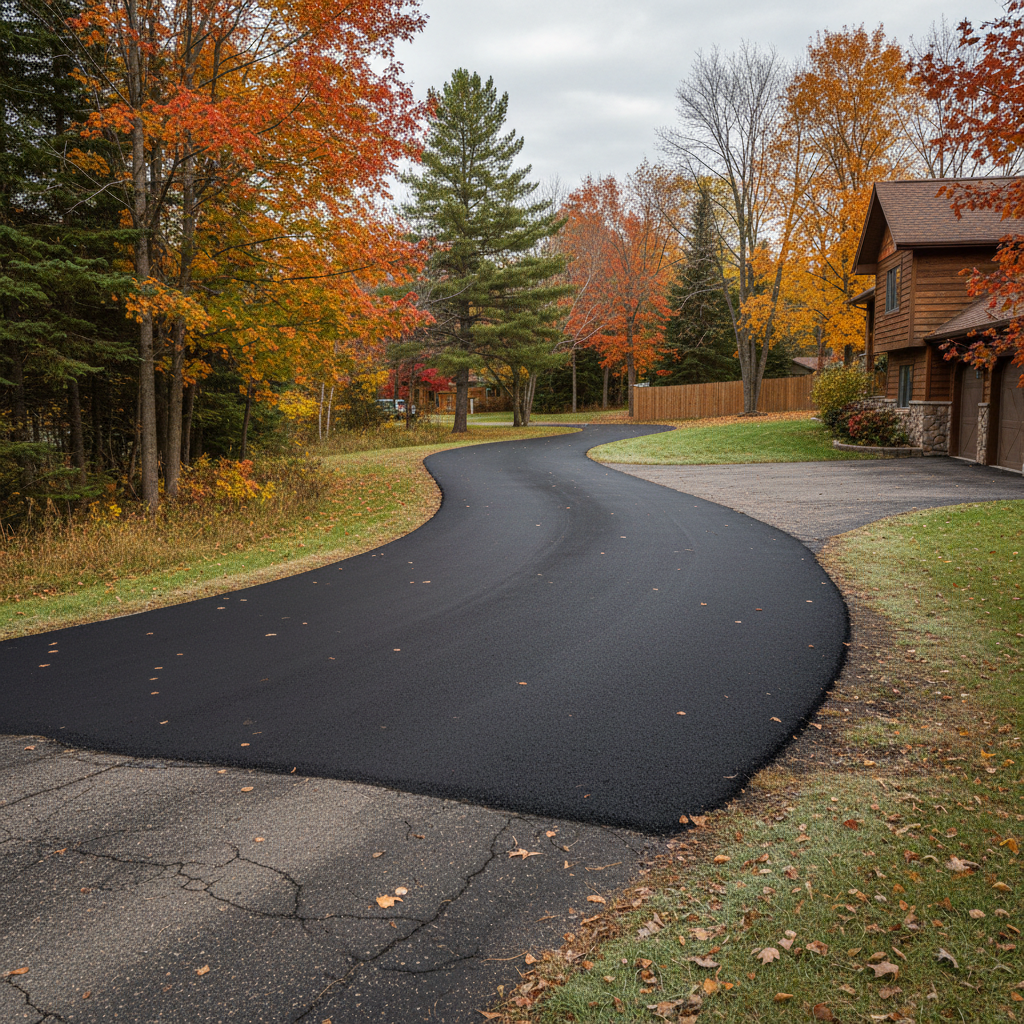
Got a pothole? Or maybe you're seeing a spiderweb of cracks that just keeps growing every time it rains. You know it needs fixing, but when's the best time to do it here in Duluth? It's not as simple as just calling someone up any old day, you know. Our climate makes asphalt patching a bit of a strategic game, and if you play it smart, you'll get a repair that actually lasts.
The Best Time for Patching: It's All About Temperature
Forget trying to patch in January. Honestly, that's just throwing good money away. Asphalt needs warmth to properly bond and cure. We're talking air temperatures consistently above 50 degrees Fahrenheit, and it's even better if the ground temperature is up there too. Here in Duluth, that usually means late spring, summer, and early fall.
- Spring (Late April/May onwards): Once the ground thaws out completely and we're past those overnight freezes, spring is a pretty good time. The asphalt plants are usually fired up, and the crews are ready to go. You'll want to get on the schedule early, though, because everyone else is thinking about repairs after winter's abuse.
- Summer (June-August): This is prime time, no doubt about it. Warm, stable temperatures mean asphalt can be laid, compacted, and cured exactly how it's supposed to. The material stays pliable longer, allowing for better work and a stronger patch.
- Early Fall (September-October): Still a good window, especially if we get one of those nice, long Indian summers. As long as the daytime temps are holding steady above 50 and we're not seeing hard freezes at night, you're usually good. Once we start dipping below freezing regularly, especially with moisture, patching becomes a riskier proposition for long-term success.
Trying to patch when it's too cold means the asphalt won't compact properly. It'll be brittle, won't bond well with the existing pavement, and you'll likely see it fail much sooner. You're better off waiting for the right conditions than rushing a bad repair, trust me.
Weather Conditions That Affect the Work
Beyond just temperature, other weather factors play a big role. You can't just patch on any warm day, after all.
- Rain: This is a big no-go for hot mix asphalt patching. You absolutely cannot lay hot asphalt on a wet surface. Water prevents proper bonding, cools the asphalt too quickly, and can lead to steam pockets that weaken the patch. If it's raining, or has just rained heavily, we're rescheduling. Period.
- Extreme Heat: While warmth is good, extreme heat (think 90+ degrees and sunny) can also be challenging. It's not a deal-breaker, but it means the asphalt cools slower, and crews have to work differently to ensure proper compaction without tracking material. For you, the homeowner, it just means the crew might be starting earlier in the day.
- Humidity: Less of a direct impact than rain or temperature, but very high humidity can sometimes affect how quickly emulsions (used in some patching types) cure. For hot mix, it's generally not a major concern.
We're always watching the forecast here at Fortune Asphalt Duluth. We want to make sure the conditions are perfect for a repair that's going to hold up to our crazy Duluth weather.
Protecting Your Investment Year-Round
So, you've got your patches done. Now what? You want to make sure those repairs, and your entire driveway, last as long as possible. Here's how you do it:
- Sealcoating: This is your first line of defense. A good sealcoat every 2-3 years protects your asphalt from UV rays, water penetration, and chemicals like oil and gas. Think of it like sunscreen and a raincoat for your driveway.
- Drainage: Water is asphalt's worst enemy. Make sure your gutters are working, and water isn't pooling on your driveway. If you've got spots where water always sits, especially common in some of our hillside neighborhoods where grading can be tricky, that's where you'll see accelerated deterioration. Address those drainage issues.
- Edge Protection: The edges of your driveway are often the weakest points. If they're crumbling, consider adding some sort of edge restraint like pavers or a concrete border to keep everything in place.
- Prompt Repair of Small Issues: Don't let a small crack turn into a big pothole. As soon as you see minor cracking, get it filled. Crack filling is a preventative measure that stops water from getting under your pavement and causing major damage when it freezes and thaws.
- Avoid Heavy Loads: Try not to park excessively heavy vehicles (like RVs or large work trucks) on your asphalt for extended periods, especially in the same spot. This can cause depressions and cracking.
- Snow Removal Care: Be careful with plows and shovels. Don't dig into the asphalt. Using a snowblower or shovel with a plastic edge can help prevent gouges and scrapes that lead to bigger problems down the road.
Taking a little care throughout the year can really extend the life of your asphalt, patches and all. It's all about being proactive, especially with the freeze-thaw cycles we get up here on Lake Superior, isn't it?