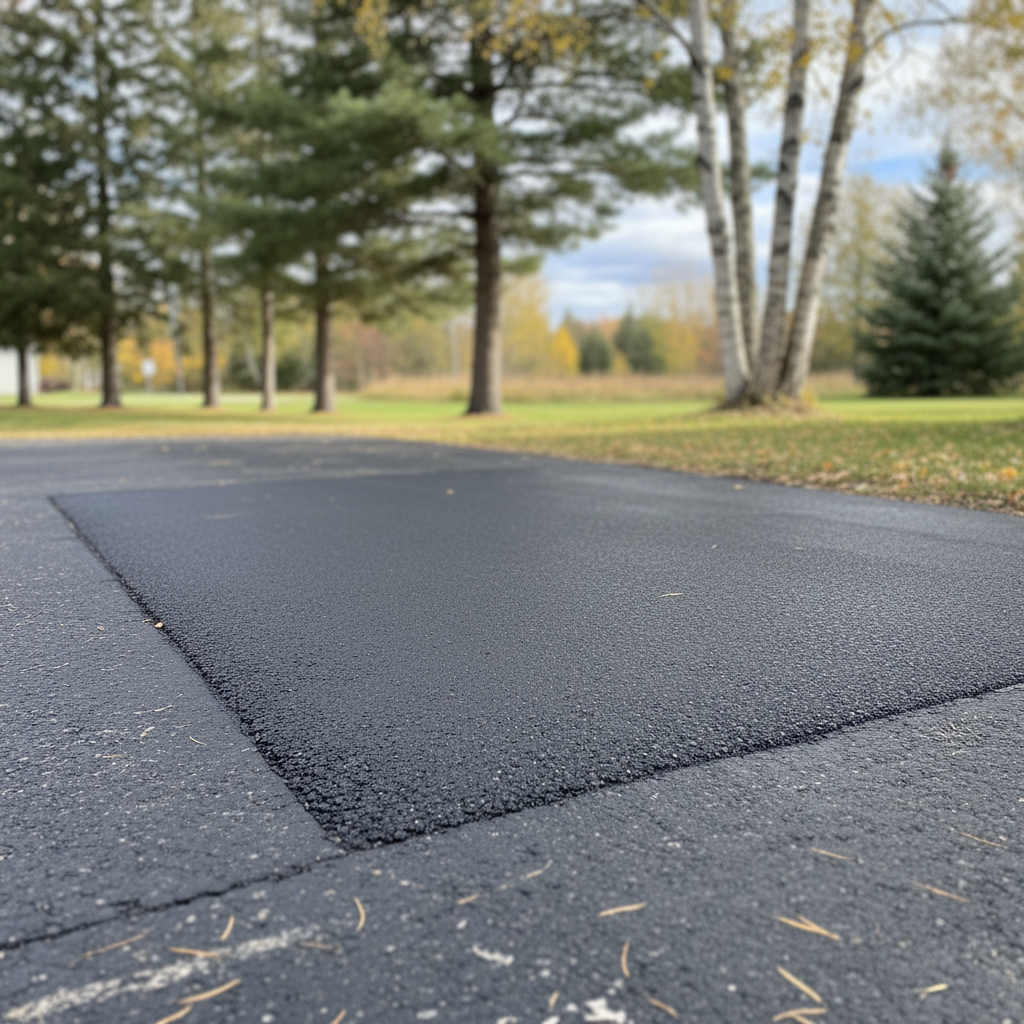
What's the difference between patching and full replacement?
This is probably the most common question I get when folks call me about their driveways. Think of it this way: patching is like putting a band-aid on a cut, while a full replacement is more like getting a whole new arm. A patch handles isolated issues – a pothole here, maybe a crack there, or a small section that's truly falling apart. We cut out the bad stuff, clean it up, and then put in fresh asphalt. It's a cost-effective fix for damage that's just in one spot.
Full replacement, on the other hand, means we rip out the entire existing asphalt surface, get the base ready again, and then lay down a brand new driveway from scratch. You go this route when the whole thing is just shot – I'm talking widespread cracking, major heaving, drainage nightmares, or the base itself is failing everywhere. Here in Duluth, with our crazy freeze-thaw cycles, sometimes a driveway just reaches a point where patching is honestly just throwing good money away. We'll tell you straight if that's the situation.
When is patching actually a good idea?
Patching is a fantastic solution when the damage is limited and hasn't messed with the overall structural strength of your driveway. If you've got a few potholes that pop up every spring, or some alligator cracking that's only in one or two spots, a good patch can really extend your driveway's life. It stops water from sneaking under the asphalt and eroding the base, which is what truly causes things to fall apart fast. It's also a smart move if you're planning to sealcoat soon; you want a smooth, solid surface for that sealant to stick to.
What kind of patching methods do you use?
We mostly use two main methods, depending on how bad the damage is and what kind it is. For smaller, shallower problems, we might do what's called a 'skin patch' or 'surface patch.' This is where we clean the area, put down a tack coat, and then lay a layer of hot mix asphalt, compacting it really well. It's quick and works great for surface-level issues.
For more serious damage, especially potholes or areas with deeper structural problems, we do a 'cut and patch' or 'full-depth patch.' This is more involved, for sure. We'll use a saw to cut out a neat, rectangular section around the damaged area, dig out the old asphalt and any compromised base material, clean out the hole, apply a tack coat to the edges, and then fill it with hot asphalt in layers, compacting each layer until it's flush with the surrounding pavement. This makes for a much stronger, more permanent repair. We don't mess around with cold patch for anything other than a temporary fix you might do yourself; we use hot mix for repairs that actually last.
How long does an asphalt patch last?
A well-done, full-depth asphalt patch, using quality hot mix and proper compaction, can last for many years – often as long as the surrounding pavement, if not longer. It's not uncommon for patches we've put down to outlast other sections of an older driveway. The key, really, is proper preparation and execution. If you just dump some cold patch in a pothole, it's going to fail quickly, especially with our heavy snowplows and freeze-thaw cycles here in Duluth. But a professional cut-and-patch job from Fortune Asphalt Duluth? That's built to hold up.
Can I patch my driveway myself?
You can, but honestly, it's usually not worth the effort for anything beyond a very temporary fix. For a quick, small pothole, you can buy bags of cold patch asphalt at the hardware store. You clean out the hole, pour it in, and tamp it down. It'll get you by for a bit. But it's not a permanent solution. Cold patch doesn't bond like hot mix, and it often breaks up or sinks over time, especially with our harsh winters. For a repair that actually lasts and looks good, you really need professional equipment – things like asphalt saws, plate compactors, and access to hot mix asphalt. Plus, knowing how to properly prepare the base and ensure good drainage is crucial. Most homeowners find it's a bigger headache than they anticipated, frankly.
Will the patch match my existing driveway perfectly?
That's a common concern, and the honest answer is: probably not perfectly, at least not right away. New asphalt is always darker than older, weathered asphalt. So, when we put down a fresh patch, it's going to stand out a bit. Over time, with exposure to the sun and elements, the new patch will lighten up and blend in better with the rest of your driveway. If you're really concerned about how it looks, a sealcoat applied over the entire driveway after the patch has cured for a few weeks will make everything a uniform, dark black color, making the patch virtually invisible. We often recommend that as a follow-up.
What about drainage? Does patching affect that?
Good question. Drainage is critical for any asphalt surface, especially around here where we get so much rain and snowmelt. When we do a patch, we're always mindful of the existing slope and drainage patterns. A bad patch can create a low spot where water collects, which just leads to more problems down the road. Our goal is to make sure the patched area is perfectly flush with the surrounding pavement, or even slightly crowned if needed, to ensure water continues to flow off your driveway properly. Sometimes, the original problem that caused the pothole was poor drainage, so we'll address that as part of the repair if we can. We've seen plenty of driveways in places like Lakeside and Woodland that have issues because the original grade wasn't quite right, and we always factor that into our repair plans.
How much does asphalt patching cost?
The cost really varies a lot depending on the size of the area, the depth of the repair, and the specific method we need to use. A small surface patch is obviously going to be less than a large, full-depth cut-and-patch job that requires significant base work. We can't give you a number without seeing it, but what I can tell you is that a professional patch is almost always significantly less expensive than a full driveway replacement. It's a cost-effective way to get more years out of your existing pavement. The best thing to do is give us a call at Fortune Asphalt Duluth. We'll come out, take a look at your specific situation, and give you a clear, no-obligation quote so you know exactly what you're looking at.